
Forschungsprofil
Als promovierte Biologin hatte ich bereits während meiner Masterarbeit die Chance die Schnittstelle zwischen Medizin und Biologie kennenzulernen. Diese fasziniert mich nach wie vor sodass ich glücklicherweise auch die Möglichkeit habe mein Forschungsprofil dort zu positionieren. Insgesamt stützt sich meine Forschung auf 2 Pfeiler, welche dank intensiver Kooperationen mit verschiedenen klinischen Partnern möglich sind.
I. In Zusammenarbeit mit der Anästhesie des St. Josef Hospitals haben wir ein innovatives und minimalinvasives Modells zur Untersuchung der globalen zerebralen Hypoxie entwickelt, welches nun genutzt werden soll um mögliche neue Behandlungsstrategie zu entwickeln.
II. Mit unseren Kooperationspartnern aus der chirurgischen Universitätsklinik und Poliklinik – Abteilung für Viszeralchirurgie des BG Universitätsklinikums Bergmannsheil Bochum versuchen wir verschiedene Hormone und Ihre Rezeptoren im enterischen Nervensystem des Menschen zu charakterisieren um dies im Bereich neurodegenerativer Erkrankungen zur Behandlung nutzbar zu machen.
In beiden Projekten legen wir großen Wert drauf die personalisierte Medizin voranzutreiben, sodass wir beispielsweise zusätzlich geschlechtsspezifische Unterschiede untersuchen.
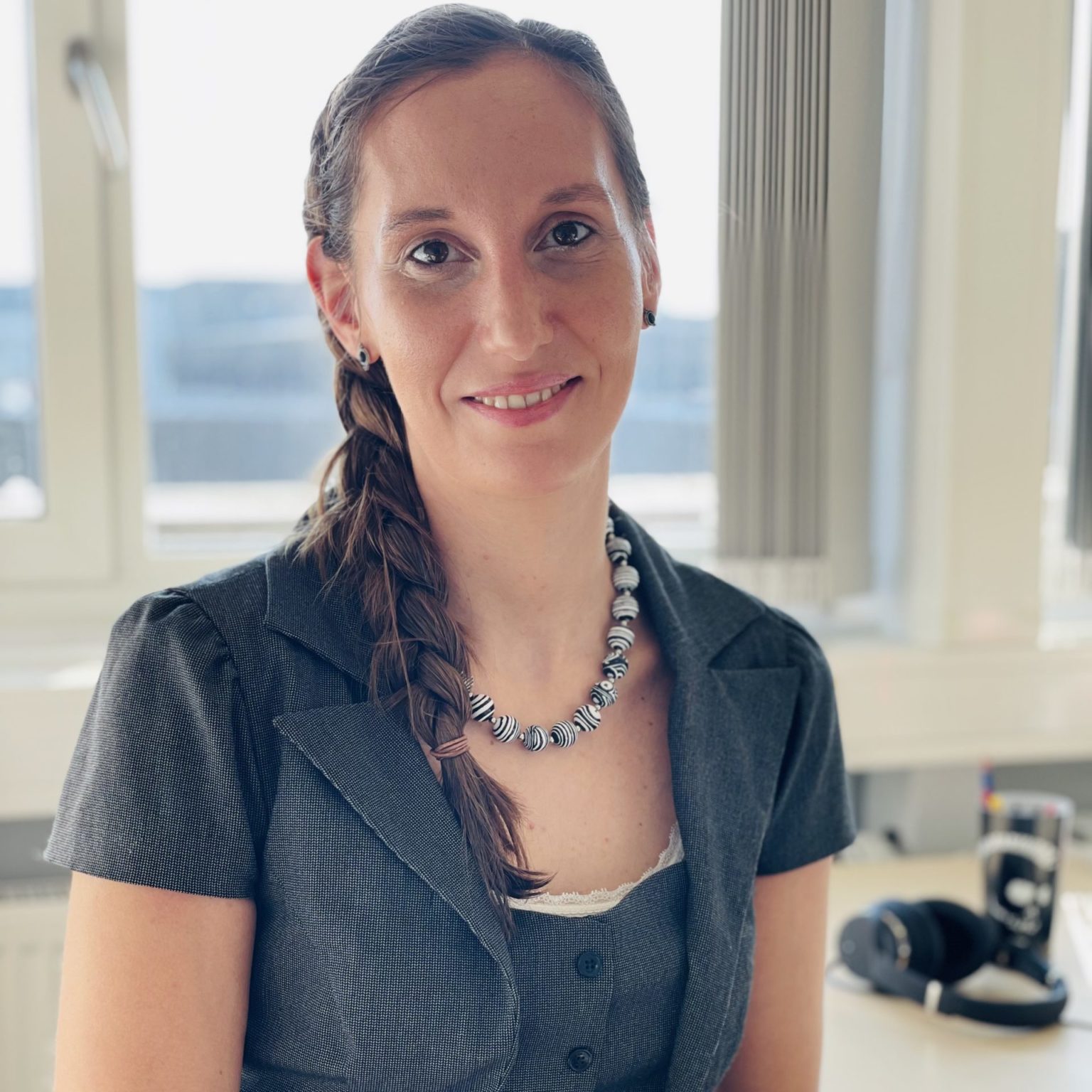
06/2021 – aktuell wissenschaftliche Mitarbeiterin in der Abteilung für Cytologie der Medizinischen Fakultät der Ruhr-Universität Bochum, Arbeitsgruppenleiterin
08/2017 – 05/2021 Elternzeit zur Erziehung meiner 2 Kinder, paralleler Ausbau zahlreicher Softskills einschließlich, Belastbarkeit, Stressresistenz, Organisationsvermögen und Verantwortungsbewusstsein sowie aktive Suche zum Wiedereinstieg
03/2014 – 08/2017 wissenschaftliche Mitarbeiterin St. Josef- und St. Elisabeth-Hospital Bochum, Neuroimmunologisches Labor des St. Josef- Hospitals Bochum der Ruhr-Universität Bochum, Mitarbeit an div. wissenschaftlichen Forschungsprojekten und eigenständige Etablierung neuer Projekte
03/2013 – 02/2014 wissenschaftliche Hilfskraft St. Josef- und St. Elisabeth-Hospital Bochum, Neuroimmunologisches Labor des St. Josef- Hospitals Bochum der Ruhr-Universität Bochum, Mitarbeit an div. wissenschaftlichen Forschungsprojekten
10/2013 – 09/2017 Promotion, Dr. rer. nat, Biologie, Ruhr-Universität Bochum, Neuroimmunologisches Labor des St. Josef-Hospitals Bochum, Medizinische Fakultät, „Differenzierung von neuralen Stammzellen in einem Mausmodell für Multiple Sklerose: Einfluss von Interferon-Beta“
10/2011 – 09/2013 Master of Science, Biologie (Neurobiologie), Ruhr-Universität Bochum, Neuroimmunologisches Labor des St. Josef-Hospitals Bochum, Medizinische Fakultät, „Moduliert Interferon-beta (IFN-β) die Neurogenese während der Experimentellen Autoimmunen Enzephalomyelitis?“
10/2008 – 09/2011 Bachelor of Science, Biologie Ruhr-Universität Bochum, Lehrstuhl für Zellmorphologie und molekulare Neurobiologie, Fakultät für Biologie und Biotechnologie, „Expressionsanalyse von Tenascin-C regulierten Genen im sich entwickelnden Rückenmark.“
stellv. dezentrale Gleichstellungsbeauftragte – der medizinischen Fakultät – seit April 2024
Medizin Didaktik Bochum – e-Learning – Fortbildung + Zertifikat 2023
Medizin Didaktik Bochum – Plenardidaktik – Fortbildung + Zertifikat 2023
Tag des Phosphatdiabetes in Bochum – 2. nationales Meeting 2023
Medizin Didaktik Bochum – Digitalisierung in der Medizin – Fortbildung + Zertifikat 2022
Medizin Didaktik Bochum – Qualifiziert schriftlich und mündlich Prüfen – Fortbildung + Zertifikat 2022
Medizin Didaktik Bochum – Planung von Lehrveranstaltungen – Fortbildung + Zertifikat 2022
Tag des Phosphatdiabetes in Bochum – 1. nationales Meeting 2022
Good Manufacturing Practice für Studenten – Zertifikat 2017
Stem Cell Network NRW – 8th International Meeting 2015
How to master scientific writing – Zertifikat 2015
Scientific Presentation skills – Zertifikat 2015
Advanced Course in Statistics – Zertifikat 2014
4. Forschungswerkstatt Multiple Sclerose 2014
ISNI 2014 – 12th International congress of neuroimmunology
Neurowoche 2014 – DGN
Stem Cell Network NRW – 7th International Meeting 2013
FELASA B – Zertifikat 2012
Publikationen
Lappe F, Heinen-Weiler J, Stahlke S, Theiss C. Ultrastructural perspectives on the enteric nervous system in Parkinson’s disease (2026)
https://doi.org/10.3389/fnins.2026.1927448
Stahlke S, Lappe F, Matschke V, Theiss C. Enteric glial cells as regulators of the gut-brain axis: hormonal signaling, stress responses and progenitor potential (2026)
https://doi.org/10.3389/fnins.2026.1922802
Theiss C, Stahlke S. Sex hormones, the gut microbiome, and neurodegenerative diseases: Lifespan perspective (2025)
https://doi.org/10.4103/NRR.NRR-D-25-00932
Busse JF, Frai J, Hamacher LI, Matschke V, Theiss C, Weber T, Herzog-Niescery J, Stahlke S. Therapeutic Potential of Edaravone for Neuroprotection Following Global Cerebral Hypoxia (2025)
https://doi.org/10.3390/ijms26189019
Epplen A, Rothöft M, Stahlke S, Theiss C, Matschke V. Caffeine mitigates ROS accumulation and attenuates motor neuron degeneration in the wobbler mouse model of amyotrophic lateral sclerosis (2025)
https://doi.org/10.1186/s12964-025-02415-5
Epplen A, Stahlke S, Theiss C, Matschke V. Which One Would You Choose? – Investigation of Widely Used Housekeeping Genes and Proteins in the Spinal Cord of an Animal Model of Amyotrophic Lateral Sclerosis (2025)
https://doi.org/10.3390/neurosci6030069
Dickmeiß J, Yoshiyuki H, Stahlke S, Weber T, Theiss C, Matschke V. Differential Protective Effects of Edaravone in Cerebellar and Hippocampal Ischemic Injury Models (2025)
https://doi.org/10.1007/s12311-025-01804-3
Brueck L, Roocke S, Matschke V, Richter-Unruh A, Marcus-Alic K, Theiss C, Stahlke S. FGF23 and Cell Stress in SaOS-2 Cells—A Model Reflecting X-Linked Hypophosphatemia Dynamics (2024)
https://doi.org/10.3390/cells13181515
Althaus O, Ter Jung N, Stahlke S, Theiss C, Herzog-Niescery J, Vogelsang H, Weber T, Gude P, Matschke V. Region-specific protective effects of monomethyl fumarate in cerebellar and hippocampal organotypic slice cultures following oxygen-glucose deprivation (2024)
https://doi.org/10.1371/journal.pone.0308635
Cihankaya H, Bader V, Winkelhofer KF, Vorgerd M, Matschke J, Stahlke S, Theiss C, Matschke V. Elevated NLRP3 Inflammasome Activation Is Associated with Motor Neuron Degeneration in ALS (2024)
https://doi.org/10.3390/cells13120995
Stahlke S, Frai J, Busse JF, Matschke V, Theiss C, Weber T, Herzog-Niescery J. Innovative in vivo rat model for global cerebral hypoxia: A new approach to investigate therapeutic and preventive drugs (2024)
https://doi.org/10.3389/fphys.2024.1293247
Neufeld PM, Frai J, Matschke V, Theiss C, Stahlke S. Validation of a Suitable Housekeeping Gene in Human Neuroblastoma SHSY-5Y Cell-Line Treated with Steroid Hormones Progesterone and Testosterone (2024)
https://doi.org/10.23937/2378-3001/1410125
Neufeld PM, Nettersheim R, Matschke V, Vorgerd M, Stahlke S, Theiss C. Unraveling the gut-brain axis: the impact of steroid hormones and nutrition on Parkinson’s Disease (2024)
https://doi.org/10.4103/1673-5374.391304
Hecking I, Stegemann LN, Stahlke S, Theis V, Vorgerd M, Matschke V, Theiss C. Methods to Study the Myenteric Plexus of Rat Small Intestine (2023)
https://doi.org/10.1007/s10571-021-01181-5
Hecking I, Stegemann LN, Theis V, Vorgerd M, Matschke V, Stahlke S, Theiss C. Neuroprotective Effects of VEGF in the Enteric Nervous System (2022)
https://doi.org/10.3390/ijms23126756
Eickhoff A, Tjaden J, Stahlke S, Vorgerd M, Theis V, Matschke V, Theiss C. Effects of progesterone on T-type-Ca2+-channel expression in Purkinje cells (2022)
https://doi.org/10.4103/1673-5374.339008
Tjaden J, Eickhoff A, Stahlke S, Gehmeyr J, Vorgerd M, Theis V, Matschke V, Theiss C. Expression Pattern of T-Type Ca2+ Channels in Cerebellar Purkinje Cells after VEGF Treatment (2021)
https://doi.org/10.3390/cells10092277
Stahlke S, Metzdorf J, Pedreitturia X, Van Leeuwen S, Faissner A, Gold R, Kleiter I. Effects of interferon-beta on neural stem cells and in a mouse model of multiple sclerosis (2014)
https://doi.org/10.1016/j.jneuroim.2014.08.521